Introduction: Why Period Panties Packaging Is More Important Than Most Brands Think
Period panties packaging is one of the most underinvested elements of a period underwear brand — and one of the highest-impact ones. In a category where most consumers are making a considered, slightly nervous first purchase, packaging plays a critical role in converting browsers to buyers, setting quality expectations, and building the brand trust that drives repeat purchases.
For wholesale brands sourcing period panties from China, packaging is also a major practical consideration. What types of packaging can your factory produce? What are the compliance requirements for your target market? What is the cost impact of different packaging options? And how do you balance brand investment against unit economics at wholesale scale? This complete period panties packaging guide answers all of these questions.
Why Packaging Matters More in Period Panties Than in Most Apparel
Period panties occupy a unique position in the apparel landscape. They are intimate, functional, and health-adjacent products that many consumers are purchasing for the first time. In this context, packaging does several jobs that it does not need to do for most clothing:
Builds confidence before purchase: A consumer who has never tried period panties before often judges product quality by packaging quality. Premium packaging communicates that the product inside is trustworthy and well-made.
Communicates the product story: Period panties have a complex value proposition — sustainability, comfort, health safety, and functional performance. Packaging is often the first place this story is told.
Signals brand values: Eco-conscious packaging reinforces sustainability credentials. Clinical, clean packaging signals health-safety focus. Colourful, body-positive packaging appeals to a younger demographic.
Satisfies retail requirements: Most retail channels — department stores, pharmacies, online marketplaces — have specific requirements for packaging format, labelling, and barcode placement.
Protects the product: Period panties need to arrive at the consumer in perfect condition — clean, dry, and undamaged.
Period Panties Packaging Types: A Complete Comparison
Here is a comprehensive comparison of the main period panties packaging formats used by wholesale brands, with their best use cases, advantages, and limitations:
Individual polybag | E-commerce, wholesale bulk | Lowest cost, lightweight, easy to handle | Limited brand impression; single-use plastic |
Kraft paper envelope | Eco-conscious brands, DTC | Sustainable, printable, premium feel | Less protection; not suitable for all climates |
Rigid retail box | Premium brands, retail shelves | Strong brand presence; excellent shelf appeal | Higher cost; heavier shipping weight |
Soft-touch folding box | Mid-premium DTC and retail | Premium feel; recyclable; compact | Moderate cost; requires design investment |
Reusable cotton pouch | Premium gift sets, eco brands | High perceived value; zero-waste messaging | Higher cost; longer production lead time |
Hanging header bag | Retail peg display | Cost-effective; easy to display | Limited space for brand storytelling |
Compostable polybag | Eco / zero-waste brands | Fully compostable; strong sustainability claim | Higher cost than standard poly; niche market |
Choosing the Right Packaging for Your Brand and Channel
For Direct-to-Consumer (DTC) E-Commerce Brands
DTC brands selling directly to consumers through their own website or platforms like Shopify have the most flexibility in packaging choice. The primary packaging priorities for DTC are: brand impression at the moment of unboxing, protection during shipping, and sustainability credentials that reinforce brand values.
A soft-touch folding box or kraft paper envelope with branded tissue paper and a printed insert card creates a premium unboxing experience that reinforces brand quality and encourages sharing on social media. For eco-conscious brands, compostable polybags or fully recyclable kraft packaging with soy-based inks align the packaging story with the product story.
For Retail Distribution
Period panties sold through retail channels — department stores, pharmacies, health retailers — must meet specific retail packaging requirements. These typically include: a barcode (EAN/UPC) on the outer packaging, a hang hole or flat-pack format suitable for the retail display format, legally required labelling (fibre content, care instructions, country of origin), and packaging dimensions that fit the retailer’s planogram.
For most retail channels, a rigid folding box or a hanging header bag provides the right combination of shelf presence, labelability, and retail practicality. Always obtain packaging specifications from your retail partners before finalising your packaging design — requirements vary significantly between retailers and markets.
For Wholesale and B2B Distribution
For wholesale orders where the end product will be repackaged by the retailer or distributor, or where brand packaging is applied later in the supply chain, individual polybags are typically the most practical and cost-effective inner packaging option. Polybags keep products clean and organised during transit and storage, and their low cost and light weight minimise shipping costs for large bulk orders.
For wholesale orders where your branded packaging is the final retail packaging, the considerations are the same as for retail distribution above.
What Must Be on Your Period Panties Packaging: Legal Labelling Requirements
Regardless of the packaging format you choose, there are legal labelling requirements that must be met for period panties sold in most international markets. Here is a complete reference guide:
Brand name / logo | ✅ Yes | On woven label and outer packaging |
Fibre content declaration | ✅ Yes | All four layers must be declared in most markets (US, EU, AU) |
Country of origin | ✅ Yes | e.g. ‘Made in China’ — mandatory for most import markets |
Care instructions | ✅ Yes | Wash symbols and/or text instructions; language varies by market |
Size label | ✅ Yes | Must match declared sizing; consistency critical for retail |
OEKO-TEX certification number | ⬜ Optional | Strongly recommended for health-focused and EU market positioning |
Barcode / EAN | ✅ For retail | Required by most retail chains and marketplace platforms |
QR code | ⬜ Optional | Links to care guide, brand story, or product page |
Recycling / disposal guidance | ⬜ Optional | Increasingly expected in EU and Australian markets |
Labelling requirements vary by market. Always verify the specific requirements for your target market with your import broker or a local compliance specialist before finalising your label artwork. Non-compliant labelling can result in customs delays, retail rejection, or fines.
Sustainable Packaging: Meeting Growing Consumer and Regulatory Expectations
Sustainability is increasingly important in period panties packaging — both as a consumer expectation and as a growing regulatory requirement. The period underwear market attracts a disproportionately eco-conscious consumer base, and packaging that contradicts the product’s sustainability story is a significant brand credibility risk.
Consumer Sustainability Expectations
Consumers who choose period panties over disposable products for environmental reasons have high expectations for the sustainability of the packaging. Single-use plastic packaging — particularly rigid plastic boxes or non-recyclable polybags — can generate negative reactions from eco-conscious buyers who feel the packaging undermines the product’s green credentials.
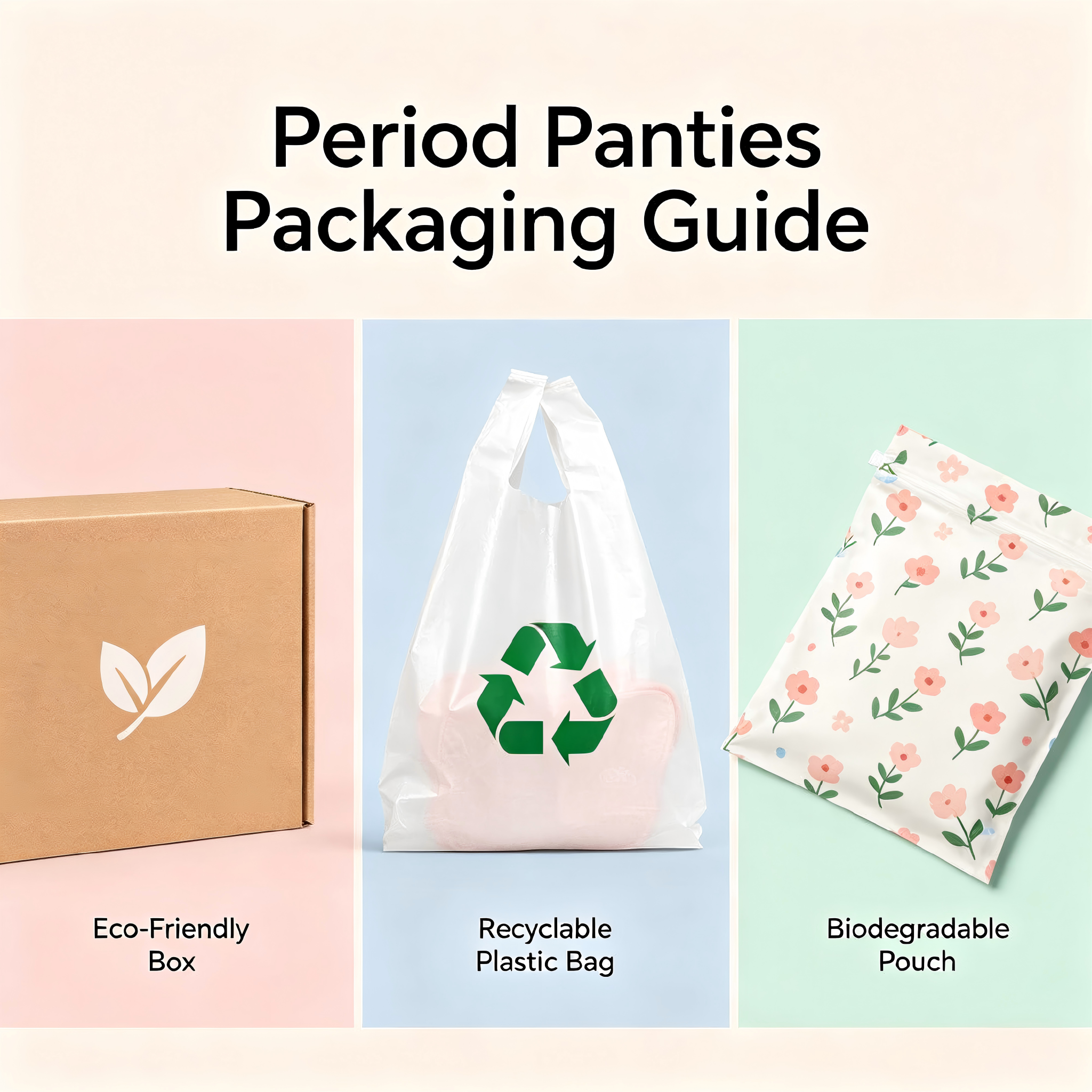
Practical sustainable packaging options that do not significantly increase cost include: kraft paper envelopes (fully recyclable, widely available), recyclable cardboard folding boxes with soy-based inks, FSC-certified paper inserts and hang tags, and recycled-content polybags for inner packaging.
Regulatory Direction
European Union regulations on single-use plastics are progressively restricting conventional plastic packaging, with further tightening expected through the decade. For brands selling into EU markets, proactively transitioning to compliant, sustainable packaging now reduces the risk of future compliance disruption and aligns with the regulatory direction of the market’s most sophisticated consumers.
Packaging Design: What Should Be on the Outside
Beyond legal labelling requirements, effective period panties packaging communicates your brand’s unique value proposition to the consumer. Key elements of strong period panties packaging design include:
Clear product identity: Style name, absorbency level, and key material information — immediately visible on the front of the package.
Flow level visual: A simple graphic showing the absorbency level (e.g. one to five drop icons) helps consumers quickly identify the right product.
Key benefit callout: One or two prominent benefit claims — ‘Leak-proof for 8 hours’ or ‘Made from organic cotton’ — that reinforce the purchase decision.
Certification badges: OEKO-TEX and other certification logos add credibility and trust, particularly for first-time buyers.
Size information: Clear size range and a brief fit guide so consumers know they are buying the right size.
Wash instructions summary: A brief care reminder on the packaging reduces returns from improper washing.
Brand story (inside or back): A brief brand narrative explaining why period panties matter and what makes your brand different — particularly effective for DTC and premium retail packaging.
How Jingzhihe Supports Period Panties Packaging for Wholesale Brands
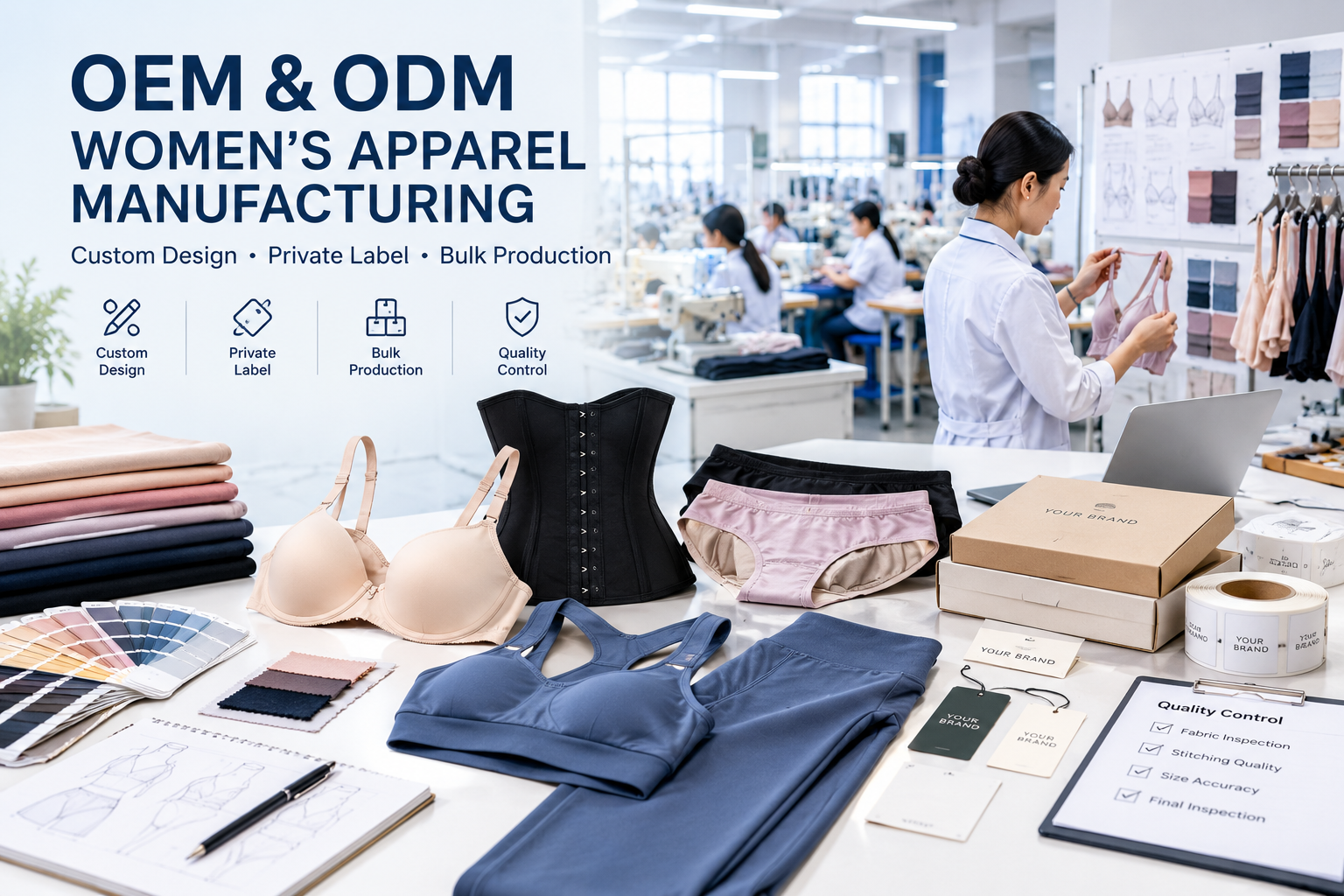
At Jingzhihe, we understand that period panties packaging is part of the product — not an afterthought. As part of our full private label and OEM services, we support wholesale clients with a complete range of packaging options, from standard polybags and kraft envelopes to custom-designed rigid boxes and eco-friendly compostable packaging.
Our packaging services include:
Custom woven care labels with your brand name, care instructions, and fibre content.
Custom hang tags in any format — printed, folded, shaped — with your brand artwork.
Individual retail polybags, kraft envelopes, or folding boxes with custom print.
Bulk export cartons with your brand markings and compliant shipping documentation.
Sustainable packaging options including kraft paper, recycled poly, and compostable alternatives.
Full compliance documentation including fibre content declarations, country of origin certificates, and OEKO-TEX references.
We work with our clients’ design teams or can recommend packaging design partners to develop artwork that is ready for production. All packaging specifications are confirmed and approved before bulk production begins.
Contact Jingzhihe today:
We look forward to helping you build a period panties brand that looks as good as it performs — from the product inside to the package outside.