Introduction: Period Panties vs Tampons — A Question Worth Answering Properly
Period panties vs tampons is one of the most searched comparisons in the menstrual health space — and it deserves a balanced, honest answer. Both products have genuine strengths and real limitations. Neither is universally better for every person in every situation. The right choice depends on your body, your lifestyle, your values, and what matters most to you in your period protection.
In this guide, we compare period panties and tampons across every dimension that matters — comfort, ease of use, protection reliability, health considerations, environmental impact, and long-term cost. We also explore the hybrid approach that many people find works best, and help you decide which product, or combination of products, is right for your life.
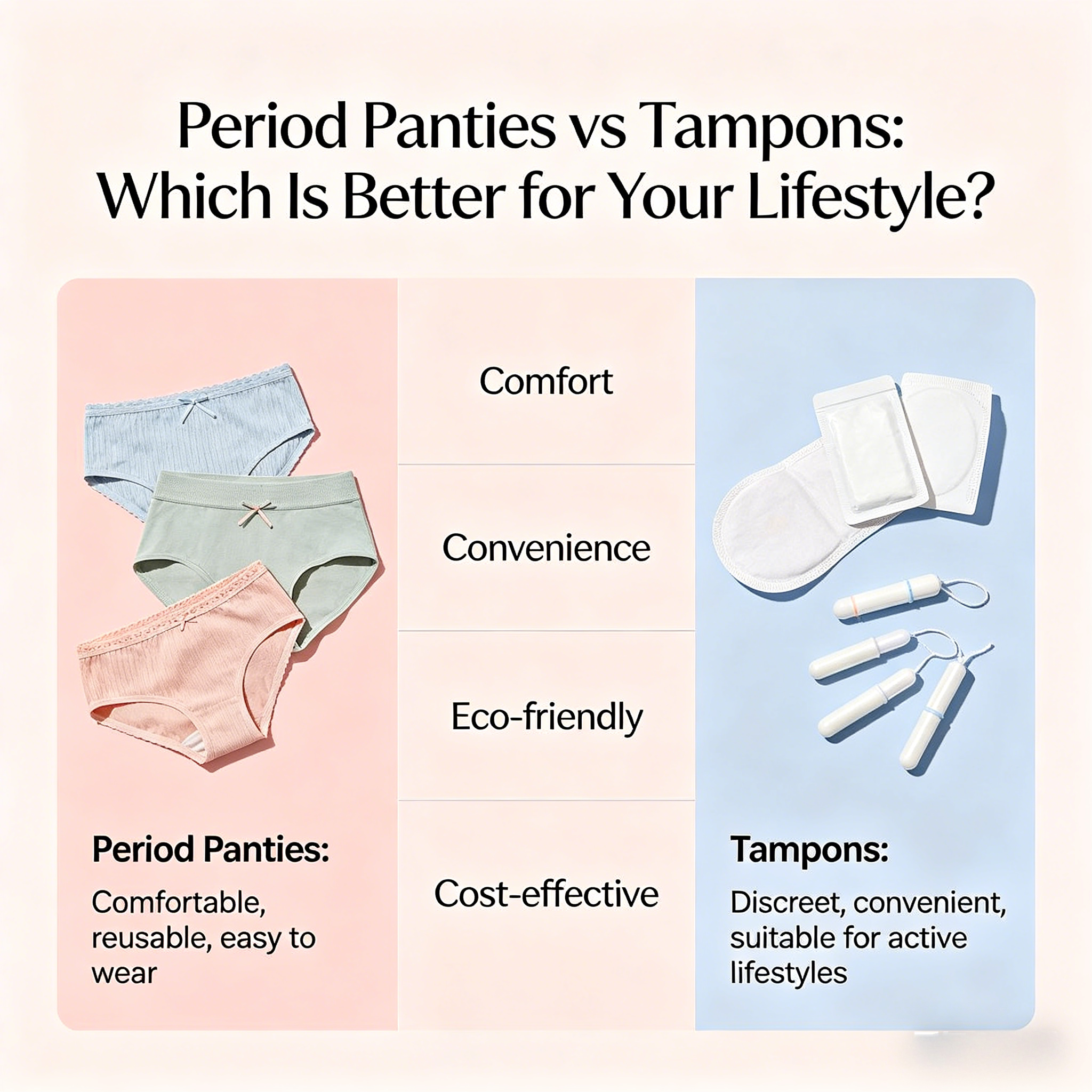
At a Glance: Period Panties vs Tampons Comparison
Category | Period Panties | Tampons |
Comfort | Wears like regular underwear, no insertion required | Internal; can cause dryness on light days |
Ease of use | None — wear like any underwear | Requires correct insertion technique |
Leak protection | Excellent with correct absorbency choice | Good when changed on schedule |
Wear duration | 4–8 hours depending on absorbency | 4–8 hours; TSS risk if worn too long |
Environmental impact | Very low — reusable for 2–5 years | High — single-use plastic and fibre waste |
Long-term cost | Low — one-time investment per pair | High — ongoing monthly purchase |
Health concerns | Skin-safe with certified fabrics; no TSS risk | TSS risk (rare); potential chemical exposure |
Learning curve | None | Moderate — insertion technique required |
Suitable for teens | ✅ Highly recommended | ✅ Yes, with guidance |
Active / sports | ✅ Great for yoga, gym, running | ✅ Good for swimming and high-impact sport |
Overnight use | ✅ Excellent — overnight styles available | ❌ Not recommended for extended overnight wear |
Visibility under clothing | Discreet — like regular underwear | None — internal product |
Comfort: How Each Product Feels During Wear
Period Panties Comfort
Period panties are worn exactly like regular underwear — there is nothing to insert, adjust, or be aware of during wear. A quality pair of period panties feels like a normal pair of underwear from the moment you put it on. The inner layer is designed to wick moisture away from the skin, keeping the surface feeling dry even as the absorbent core fills. Many wearers report that period panties feel significantly more comfortable than pads or tampons, particularly during the first few hours of wear.
The comfort advantage of period panties is most pronounced during lighter flow days and overnight wear — situations where tampons tend to cause dryness and discomfort when flow is too light for the absorbency level used. Period panties absorb whatever flow is present without any dryness side effects.
Tampon Comfort
When used correctly, tampons are designed to be unnoticeable during wear. An internal product that sits in the vaginal canal, a well-inserted tampon should not be felt during normal activity. However, tampon comfort varies significantly depending on the absorbency level used relative to actual flow. Using a high-absorbency tampon on a light flow day can cause uncomfortable dryness and difficulty removing the product. For many users, finding the right absorbency for each day of the cycle requires trial and error.
Tampon comfort also depends on correct insertion technique. Users who struggle with insertion — including teens and people new to internal products — may find tampons uncomfortable until they develop confidence with the technique.
Ease of Use: Learning Curves and Daily Practicality
Period panties require zero learning curve. You wear them exactly like any pair of underwear. There is no technique to master, no risk of incorrect use, and no adjustment required during wear. This makes them particularly accessible for teens, first-time users, and anyone who prefers simplicity in their period management routine.
Tampons, by contrast, require correct insertion technique. For most people, this becomes second nature quickly, but the initial learning curve — including understanding proper insertion depth, string placement, and how to remove the product cleanly — can make tampons feel intimidating for new users. Once mastered, tampons are a discreet and reliable option. However, the requirement for proper technique does introduce a complexity that period panties entirely eliminate.
Protection: How Reliable Is Each Product?
Period Panties Protection
The protection reliability of period panties depends almost entirely on matching the absorbency level of the product to the actual flow being managed. A high-quality heavy absorbency period panty, used on a heavy flow day and changed at appropriate intervals, provides excellent leak protection. Period panties also have the advantage of catching any flow regardless of direction or body position — which makes them particularly reliable during overnight use and physical activity.
Where period panties are most likely to fall short is when users choose an absorbency level that is too low for their actual flow, or when they wear the product beyond its capacity without changing. Selecting the right absorbency and managing change frequency are the two most important factors for reliable period panties protection.
Tampon Protection
Tampons provide reliable internal protection when used at the correct absorbency level for the current flow and changed at regular intervals — typically every four to eight hours. The internal placement of tampons means they collect flow at the source, which provides very effective protection during activities like swimming where external products are not practical.
However, tampons have a fixed wear time limitation — beyond eight hours, the risk of Toxic Shock Syndrome (TSS), a rare but serious bacterial condition, increases. This limitation means tampons require more active management than period panties, particularly overnight, when wear duration can easily exceed the safe limit. Many people who use tampons during the day switch to period panties for overnight use to avoid this concern.
Health and Safety Considerations
Period Panties Health Profile
Period panties made from certified, skin-safe materials — such as OEKO-TEX Standard 100 certified organic cotton or bamboo inner layers — are free from the synthetic fragrances, dioxins, and chemical additives that have raised concern about some conventional disposable menstrual products. There is no TSS risk associated with period panties. For people with sensitive skin, allergies, or conditions like vulvodynia, period panties made from natural fibres can be significantly more comfortable and less irritating than internal products.
Tampon Health Profile
Conventional tampons have been associated with Toxic Shock Syndrome (TSS) — a rare but potentially serious bacterial infection. While TSS is extremely uncommon, it is most strongly linked to tampon use, particularly prolonged wear of high-absorbency products. Many tampon brands also contain synthetic fragrances, chlorine bleach residues, and in some cases pesticide residues from non-organic cotton. While regulatory bodies consider approved tampons safe for use as directed, a growing number of consumers prefer to minimise their exposure to these substances, particularly in an intimate application.
Environmental Impact: The Clear Difference
On environmental impact, period panties and tampons are not comparable. A single person who menstruates will use an estimated 5,000 to 15,000 disposable menstrual products — including tampons — over their lifetime. Most tampons contain a combination of cotton, synthetic fibres, plastic applicators, and plastic packaging that takes hundreds of years to break down in landfill.
Period panties, by contrast, are reusable for two to five years. A set of five to seven pairs can replace thousands of disposable products over that period. The environmental footprint per use is dramatically lower than any disposable alternative — a fact that resonates strongly with environmentally conscious consumers and is one of the primary drivers of period panties adoption globally.
Long-Term Cost Comparison
Over a lifetime of menstruation, tampon costs add up significantly. Regular tampon use can cost between $100 and $200 per year depending on brand and flow level — representing a lifetime cost of $3,000 to $6,000 or more.
A quality set of five to seven period panties — typically costing between $100 and $350 at retail — lasts two to five years and replaces the majority of those disposable purchases during that period. Even accounting for multiple set replacements over a lifetime, the long-term financial saving from switching to period panties is substantial for most users.
The Hybrid Approach: When Using Both Makes Sense
Many people find that the most practical approach is not choosing between period panties and tampons but using both strategically. Common hybrid approaches include:
Tampons during the day for activities requiring internal protection (particularly swimming), with period panties as backup and for overnight use.
Period panties on lighter flow days when tampon dryness is a concern, with tampons on heavier days when internal protection is preferred.
Period panties for overnight use (eliminating TSS risk from extended tampon wear), with tampons during active daytime hours.
Period panties as a backup layer with a tampon or menstrual cup on the heaviest flow days for maximum protection.
The hybrid approach is increasingly popular because it takes the best of both products — the discretion and swimming suitability of tampons, and the comfort, safety, and sustainability of period panties — without requiring a complete commitment to either.
Which Is Right for You?
Period panties are likely the better choice if: you prioritise comfort and simplicity, you want to reduce your environmental impact, you are new to period management or prefer no-learning-curve protection, you experience dryness or discomfort with tampons on lighter days, or you need reliable overnight protection without TSS concerns.
Tampons remain a strong choice if: you swim regularly during your period, you prefer internal protection that is completely invisible, or you are already comfortable with tampon use and do not want to change your routine. For most people, a combination of both provides the most flexible and comfortable approach across a full menstrual cycle.
A Note from Jingzhihe: Manufacturing Period Panties for Every Lifestyle
At Jingzhihe, we manufacture period panties for brands and retailers worldwide — in every absorbency level, style, and fabric combination needed to serve consumers at every stage of their period care journey. From light everyday styles to heavy overnight protection, our products are designed to complement any period management routine, whether that means replacing tampons entirely or working alongside them.
Contact Jingzhihe today:
Website: https://ysssecret.com/
Email: susie@ysslingerie.com
Phone / WhatsApp: +86 13242263626